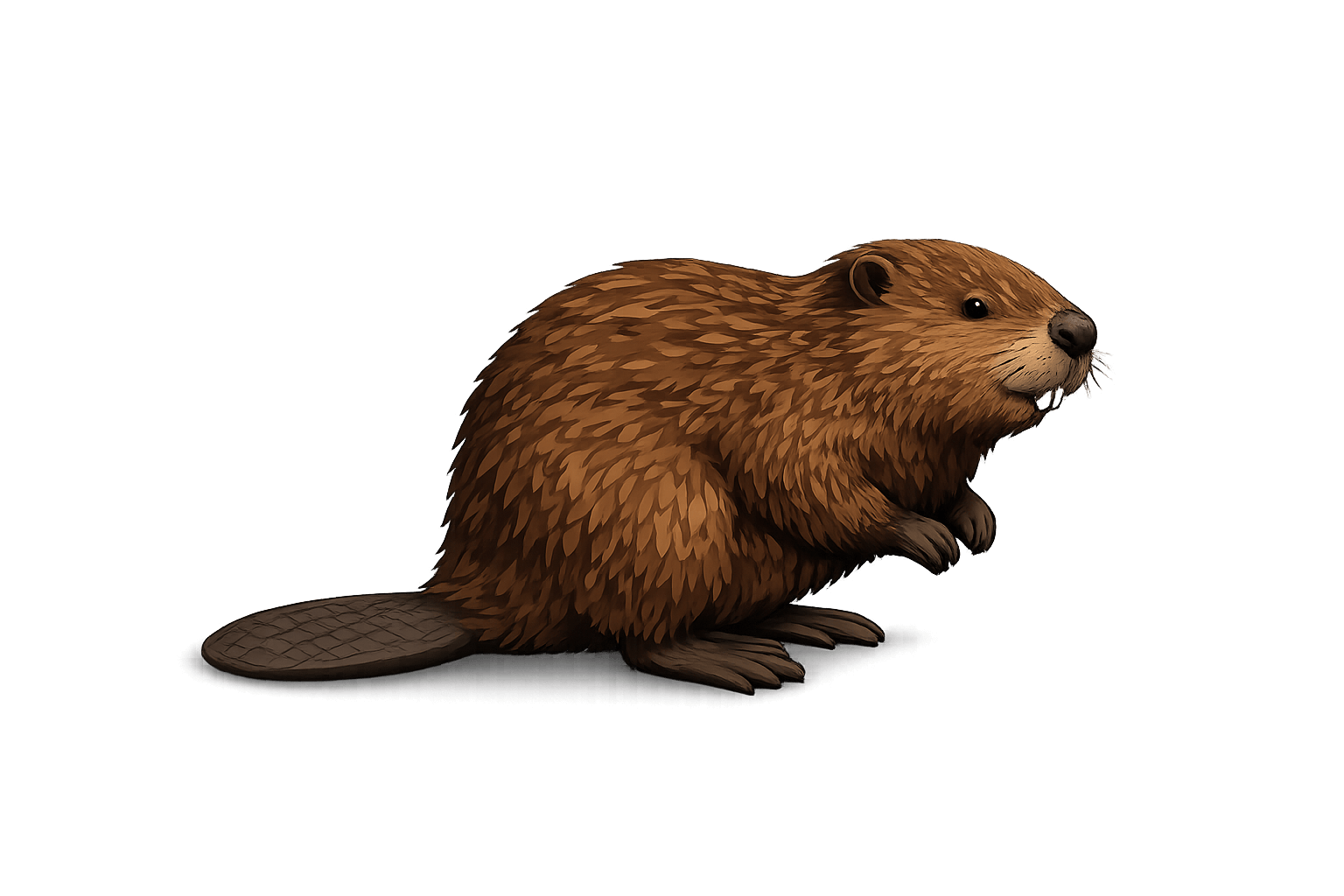
There are few animals more aggressively Canadian than the beaver.
Not the moose. Not the loon. Not even the Canada goose with its permanent "fight me" attitude.
The beaver is on another level entirely.
This is an animal that looked at a flowing river and thought, "I can fix that." And then actually did.
For a country that quietly prides itself on resilience, practicality, and getting things done without making a huge scene about it, the beaver might be the most accurate national symbol Canada could possibly have chosen.
Canada Built an Identity Around a Giant Water Rat
First of all, it's important to acknowledge that beavers are objectively strange animals.
They have giant orange teeth. They slap their tails on water like annoyed construction managers. They live in self-built lodges. And they spend most of their lives hauling wood around with obsessive dedication.
Yet somehow, Canadians collectively looked at this chaotic little engineer and said: "Yes. That one represents us."
And honestly? Fair enough.
The beaver played a massive role in the early economic history of Canada. During the fur trade of the 1600s and 1700s, beaver pelts were incredibly valuable in Europe, especially for fashionable felt hats.
At one point, beaver fur was basically the oil industry of early Canada.
The demand shaped exploration routes, trade networks, relationships between European settlers and Indigenous peoples, and the growth of entire companies like Hudson's Bay Company.
Huge parts of the country were mapped and economically developed because people were chasing beavers around rivers with canoes.
Which is a sentence that sounds fake until you remember Canadian history is weird.
Nature's Tiny Civil Engineers
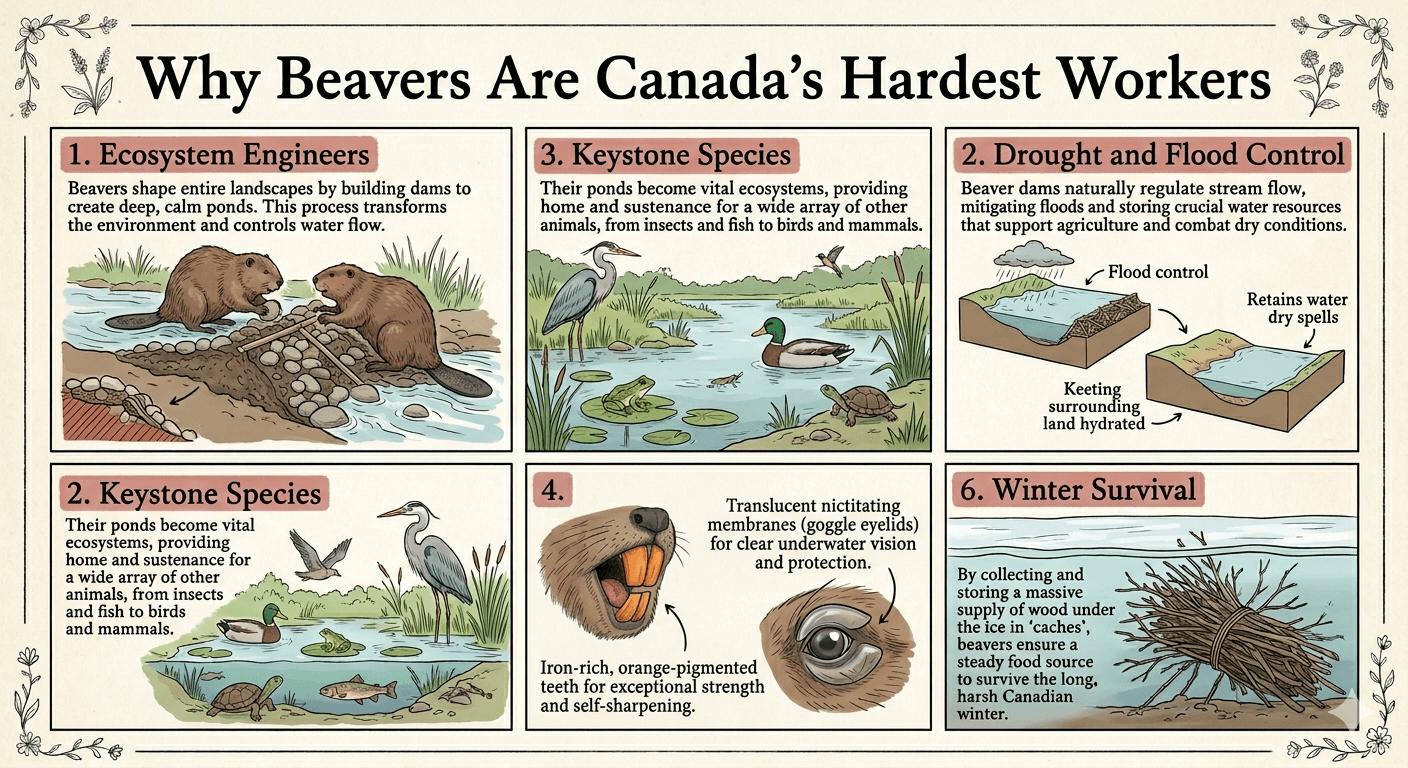
What makes beavers so fascinating is that they don't just live in environments — they actively redesign them.
A beaver sees running water and immediately starts a construction project.
Using branches, mud, rocks, and whatever else is nearby, they build dams that slow rivers and create ponds. Those ponds protect their lodges from predators and create stable ecosystems that benefit countless other species.
Fish. Frogs. Birds. Insects. Wetland plants.
Entire ecosystems can form around beaver activity.
Scientists actually consider beavers a "keystone species" because their work has such a huge environmental impact.
Which is impressive for an animal whose daily routine mostly consists of chewing trees and committing infrastructure projects.
The Energy of Someone Who Can't Sit Still
There's something deeply relatable about the beaver work ethic.
Beavers are constantly busy.
They prepare for winter months in advance. They maintain their dams relentlessly. If water starts leaking through a structure, they fix it immediately. If you play the sound of running water near a beaver, there's a good chance it will try to repair the problem because its brain basically interprets the sound as unfinished work.
Imagine being so committed to your job that you hear a leak and instinctively start gathering lumber.
That's beaver-level dedication.
Canadians tend to romanticize quiet competence — people who work hard without demanding attention for it. The beaver fits perfectly into that mindset.
No dramatic speeches. No flashy behaviour. Just relentless construction.
The Original Canadian Homeowner
Beavers are also deeply committed to real estate.
Not only do they build homes, they build waterfront homes with private security moats.
Honestly, in this economy, they may be the most successful property developers in the country.
Their lodges are engineering marvels too. Carefully insulated, strategically placed, and built to survive brutal Canadian winters, they're designed with underwater entrances that help keep predators out while allowing access even when ponds freeze over.
Meanwhile humans lose Wi-Fi for 14 minutes and completely fall apart.
From Fur Trade to National Symbol
The beaver became such an important symbol in Canada that it appeared on early stamps, coats of arms, company emblems, and eventually Canadian nickels.
In 1975, it was officially recognized as a symbol of Canadian sovereignty.
Which means an animal famous for chewing wood received formal constitutional respect before many Canadians can even afford a cottage near one.
But the symbolism makes sense.
The beaver represents persistence, resourcefulness, cooperation, and adaptation — traits Canadians like to believe define the country itself.
Also stubbornness. Definitely stubbornness.
Weirdly Adorable, Slightly Unhinged
Part of the charm of beavers is that they exist in a weird space between adorable and mildly concerning.
They look cute right up until you remember those teeth can cut through actual trees.
There's also something hilarious about the scale of their confidence. Beavers are not large animals, yet they routinely alter entire landscapes like tiny unionized construction crews.
You almost have to respect the audacity.
And unlike some national symbols that exist mostly in textbooks or tourist ads, beavers are still very much part of everyday Canadian wilderness. If you spend enough time near lakes, rivers, or wetlands, chances are you'll eventually spot evidence of their work.
Perfectly gnawed tree stumps. Small dams across creeks. Suddenly flooded patches of forest.
Tiny signs that some overachieving rodent decided the neighbourhood needed renovations.
Final Thoughts
The beaver isn't flashy.
It's not elegant. It's not fierce. It's not majestic in the way eagles or lions are.
But it works.
Relentlessly. Quietly. Effectively.
And maybe that's exactly why Canadians connect with it so much.
The beaver survives harsh winters, adapts to difficult environments, builds what it needs with the materials available, and just keeps going no matter what.
That's not just a national symbol.
That's practically a Canadian personality trait.